Comparing the Top 5 Organic Baby Formulas for Sensitive Stomachs
Baby|January 1, 2026Introduce The Pacifier - A Practical Guide for New Parents
Kids|October 29, 2025How Stress Can Affect Your Body While Pregnant: 12 Signs to Watch
Pregnancy|October 22, 202512 Baby Care Mistakes Most New Parents Make (And How to Fix Them)
Baby|October 22, 2025Useful Baby Care Tips Every First-Time Parent Should Know
Baby|September 28, 2025Kid-Friendly Smart Home - Safe, Functional and Comfortable
Family lifes|September 27, 2025The Best and Safest Exercises During Pregnancy for Every Trimester
Exercise during pregnancy is not just safe for most women, it is actively beneficial for both mother and baby. The research is clear, consistent, and has only grown stronger over the past decade.
What is less clear, for most pregnant women, is exactly what to do at each stage and how hard to push. That is what this covers.
What the Guidelines Actually Say
The American College of Obstetricians and Gynecologists [1] recommends that pregnant women with uncomplicated pregnancies get at least 150 minutes of moderate-intensity aerobic activity per week. That breaks down to about 30 minutes, five days a week, which is genuinely achievable for most people.
Moderate intensity means you can hold a conversation but would not be able to sing comfortably. That is the practical benchmark. If you were active before pregnancy, maintaining your routine with modifications is appropriate. If you were not, starting gradually is the right move.
First Trimester: Work With Your Energy, Not Against It
The first trimester is complicated by fatigue and nausea, which makes even mild exercise feel ambitious some days. This is not the trimester to push personal records. It is the trimester to build or maintain a habit.
Walking is underrated and completely underutilized. A 20 to 30 minute brisk walk most days supports cardiovascular health, manages early pregnancy weight changes, and costs nothing. Many women find that light movement actually reduces nausea better than lying still, which feels counterintuitive until you experience it firsthand.
Swimming in the First Trimester
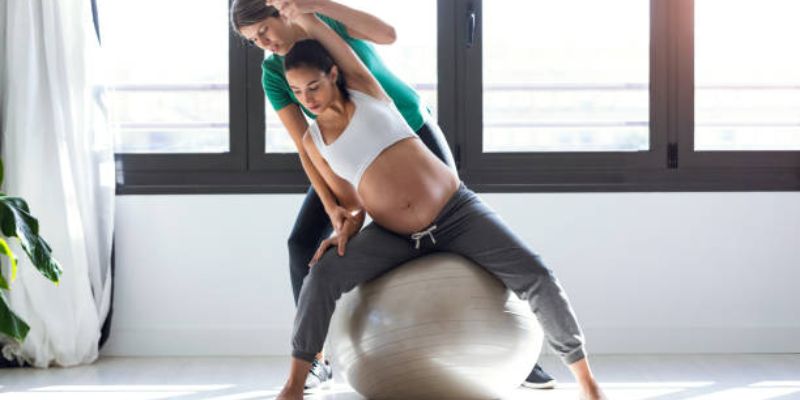
Swimming is one of the best exercises during pregnancy, and the first trimester is a good time to start if you are not already a regular swimmer. The water supports your body weight, eliminates fall risk, and keeps core temperature lower than land-based cardio.
Lap swimming at a moderate pace is ideal. Even water walking in a shallow pool provides meaningful cardiovascular benefit with virtually no impact stress. Many community pools offer dedicated prenatal aqua fitness sessions, which are worth trying if you prefer structured classes over solo lane work.
Strength Training in the First Trimester
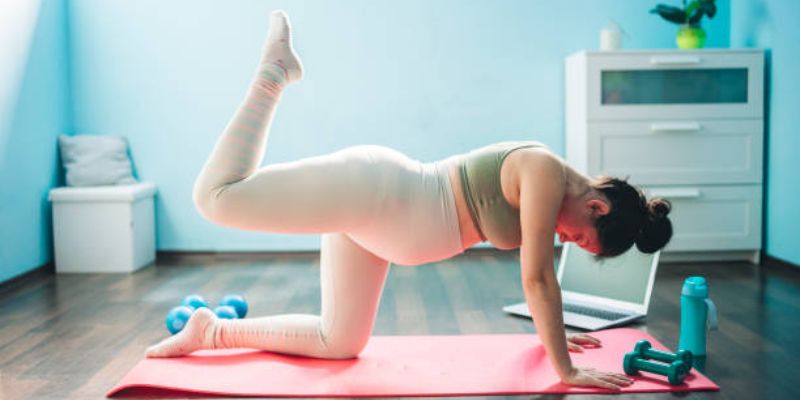
Light to moderate strength training is safe in the first trimester and has real benefits including better posture, reduced lower back pain later in pregnancy, and faster postpartum recovery. Focus on compound movements like squats, rows, and modified push-ups using your own bodyweight or light dumbbells.
Keep rest periods adequate and avoid holding your breath during exertion, a common habit known as the Valsalva maneuver that increases intra-abdominal pressure. Exhale on the effort. This becomes more important as the pregnancy progresses.
Second Trimester: The Window Most Women Feel Best
The second trimester is when most women report their energy returning and nausea fading. It is also when the belly becomes visible and starts affecting balance and center of gravity. Exercise choices need to reflect both the improved energy and the new physical reality.
This is the trimester where consistent exercise during pregnancy pays off the most. Research consistently shows that women who exercise regularly in the second trimester have lower rates of gestational diabetes, better blood pressure control, and report significantly better mood and sleep quality compared to sedentary pregnant women.
Prenatal Yoga in the Second Trimester
Prenatal yoga is one of the most practical and accessible options for the second trimester, and it does a lot more than stretch. It builds functional core and hip strength, trains breathing patterns useful for labor, and directly addresses the postural changes that cause back and pelvic pain.
Look for classes or apps specifically labeled prenatal rather than adapting standard yoga on your own. Positions like deep twists, full inversions, and lying flat on the back for extended periods are contraindicated. The Glo app and Down Dog both offer dedicated prenatal yoga programs that are well-structured and update their modifications regularly.
Walking Continues to Be the Most Consistent Option
Walking remains the most consistently recommended exercise during pregnancy across all three trimesters because it adapts easily, requires no equipment, and carries minimal injury risk. In the second trimester, aim for 30 to 45 minutes at a pace where your breathing is elevated but controlled.
Invest in proper footwear at this stage. Pregnancy affects foot arch and width due to relaxin hormone loosening ligaments. Shoes that fit pre-pregnancy may not fit or support correctly by week 20. Brooks Ghost, ASICS Gel-Nimbus, and New Balance Fresh Foam are commonly recommended for their arch support and wide toe boxes.
Pelvic Floor Work Belongs in Every Trimester
Pelvic floor exercises, commonly called Kegels, are appropriate and important from the first trimester through to delivery. The pelvic floor supports the uterus, bladder, and bowel, and pregnancy places significant downward pressure on it for months.
A proper Kegel involves contracting the muscles used to stop urine flow, holding for five seconds, and releasing fully. Ten repetitions, three times daily is the standard starting protocol. Many women do them incorrectly by engaging the glutes or thighs instead. A pelvic floor physiotherapist can confirm correct technique and is worth a single consultation.
Third Trimester: Modify, Do Not Stop
The instinct to stop exercising entirely in the third trimester is understandable but counterproductive for most women. Exercise in the third trimester [2] is associated with shorter active labor, lower rates of cesarean delivery, and better infant birth weight outcomes.
The modifications required are real, though. Avoid any exercise that involves lying flat on your back for more than a few minutes after 28 weeks. Balance-dependent exercises like single-leg work need extra caution or a support surface. The center of gravity has shifted significantly by this point and fall risk is genuinely elevated.
Swimming and Aqua Fitness in the Third Trimester
Swimming becomes even more valuable in the third trimester because it is one of the few activities where the belly stops being a physical obstacle. Buoyancy takes the load off the pelvis, hips, and lower back, which is a relief that is difficult to fully describe until you have experienced it at 34 weeks.
Aqua aerobics classes designed for pregnant women provide both cardio conditioning and community, which has its own value when the final stretch feels isolating. Sessions typically run 45 to 60 minutes and most pools keep water temperatures at a safe level, though you should still confirm the pool temperature stays below 89 degrees Fahrenheit.
Stationary Cycling in the Third Trimester
Outdoor cycling becomes risky in the third trimester due to balance changes and fall risk. Stationary cycling removes that concern entirely while still providing solid low-impact cardiovascular conditioning. The upright position on a stationary bike also accommodates a large belly comfortably, unlike road cycling posture.
Peloton and NordicTrack both offer structured low-impact cycling programs, though you do not need a connected bike to benefit. Any stationary bike at a moderate resistance level for 20 to 30 minutes provides meaningful cardiovascular work without placing undue stress on the joints or pelvic floor.
What to Avoid Across All Trimesters
Certain activities carry risks that outweigh benefits at any stage of pregnancy. Contact sports, downhill skiing, horseback riding, and scuba diving are contraindicated throughout pregnancy. Hot yoga and any exercise in high heat or humidity are also off the list because overheating raises core temperature in ways that can affect fetal development.
After the first trimester, avoid exercises that require prolonged flat-back positioning. Avoid heavy overhead lifting that strains the lower back. And skip any high-impact jumping or plyometrics if you experience pelvic girdle pain, which affects roughly 20 percent of pregnant women according to current research.
Warning Signs That Mean You Stop Immediately
No exercise discussion for pregnancy is complete without being direct about warning signs. Stop immediately and contact your provider if you experience vaginal bleeding, chest pain, severe shortness of breath disproportionate to your effort level, calf pain or swelling, headache, dizziness, or decreased fetal movement after exercise.
These are not symptoms to wait out. Safe exercise guidelines for pregnant women [3] are built around the understanding that most exercise is beneficial, but the body communicates clearly when something is wrong. Trust that communication.
Building a Routine That Holds Through All Three Trimesters
The most effective prenatal exercise plan is the one you will actually do consistently across nine months of changing energy levels, body shape, and emotional states. That means building flexibility into the routine from the start.
Have a primary activity you enjoy and a backup for days when that is not possible. Pair harder sessions earlier in the week when energy is typically higher. Accept that the third-trimester version of your routine will look different from the first, and that is entirely correct. Consistency over intensity is the governing principle from week six to week forty.
References
[1] Exercise During Pregnancy Recommendations – https://www.acog.org
[2] Third Trimester Exercise and Labor Outcomes – https://www.nih.gov
[3] Safe Exercise Guidelines for Pregnant Women – https://www.cdc.gov

Family lifes
Practical Parenting Hacks To Save 10 Hours Of Chores Every Week
February 9, 2026
Pregnancy
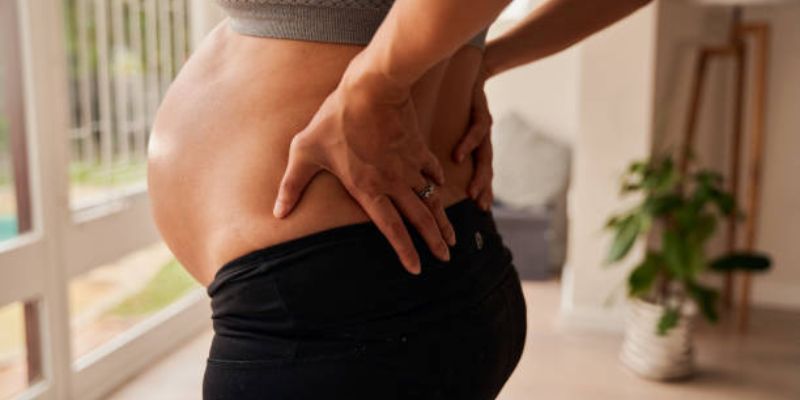
Proven Ways to Reduce Back Pain During Pregnancy and Stay Comfortable
October 18, 2025

Kids
Tips For Managing Screen Time For Kids
October 17, 2025

Family lifes
Healing Broken Relationships: How To Rebuild Trust After Family Conflicts
October 14, 2025