Why Bamboo and Food-Grade Silicone Are Replacing Plastic Baby Gear
Baby|March 20, 20265 Signs Your Baby’s Skin Barrier Is Damaged (And Which Creams Help Fast)
Baby|March 1, 202612 Proven Ways to Reduce Anxiety During Pregnancy
Pregnancy|January 16, 2026Introduce The Pacifier - A Practical Guide for New Parents
Kids|October 29, 2025How To Encourage Reading Habits In Kids
Kids|October 16, 2025Breastfeeding Basics: Essential Tips For First-Time Moms
Pregnancy|September 29, 2025Introduce The Pacifier - A Practical Guide for New Parents
Every time you hold your tiny new baby, affection gushes out automatically. The baby is so adorable and lovable. But then, there are the tears. Imagine it is midnight. The world outside is quiet. But your baby is not. You are half awake, rocking your newborn, wondering whether a pacifier might save the night or create more questions down the road.
Introducing a pacifier is one of those “should I or shouldn’t I” moments. Makes you wonder, “Should I give this little one a pacifier?” This is a common question among new parents. They are often puzzled by all the pros and cons. Let us walk you through some practical advice that you can use to introduce a pacifier in your baby’s routine.
The Benefits of Using a Pacifier
Here are some benefits of using a pacifier for your baby:
Soothe & self-calm
The natural sucking reflex is not just about feeding. It is often comforting. A pacifier can help your baby settle when they are fussy, anxious, or overstimulated.
Sleep help and a safer sleep environment
Some evidence shows that giving a pacifier at nap time or bedtime is associated with a reduced risk of Sudden Infant Death Syndrome (SIDS). Also, a pacifier can sometimes help a baby to fall asleep faster or return to sleep more easily.
Useful in certain medical or travel scenarios
This is a great benefit of a pacifier. For example, during a flight, when the ear pressure is strange. Or when a baby is undergoing a minor procedure. In instances like this, a pacifier may help distract and ease the discomfort of the baby.
Potential benefit for preterm or special-care babies
In preterm infants, the non-nutritive sucking, like with a pacifier, is very helpful. It has been linked to improvements in feeding readiness and shorter hospital stays.
Better alternative to thumb-sucking
While both sucking habits come with trade-offs, a pacifier can be removed by you when you choose.
The Cons of Using a Pacifier
There is no “silver bullet” in parenting. So here are the realistic issues when introducing a pacifier:
Potential impact on breastfeeding
If you are breastfeeding, introducing a pacifier too early, like even before breastfeeding is well established, can be bad. It may cause “nipple confusion” or interfere with latch and feeding patterns. Some guidelines recommend waiting until feeding is routine.
Ear infections and other risks
Some studies link pacifier use in babies, especially beyond 6 months, to more frequent middle-ear infections like otitis media.
Dental and oral development concerns
Long use of pacifiers, like past age 2, can contribute to mis-aligned teeth. It can also lead to palate changes and may even interfere with speech and language in some cases.
Dependency or sleeping disruption:
If the baby always relies on the pacifier to fall asleep, they might wake up when it falls out or be very upset without it.
Hygiene and choking hazards
This is one of the most obvious disadvantages of using pacifiers for children. Pacifiers must be cleaned regularly. They must be replaced when worn, and not tied around the baby’s neck or dipped in sweet substances. This can lead to cavities.
Pacifier Types, Features, and Weaning Timeline: What Parents Should Know
| Category |
Details & Expert Tips |
Best For / When to Use |
| 1. Orthodontic vs. Regular Pacifiers |
Orthodontic pacifiers are designed with a flattened bottom and rounded top to support natural oral development and reduce dental misalignment. Regular pacifiers (rounded nipple) are simpler and often preferred by newborns for initial soothing. |
Orthodontic pacifiers: best for long-term use and after 3 months. Regular pacifiers: best for newborns adjusting to the sucking reflex. |
| 2. Silicone vs. Latex Pacifiers |
Silicone pacifiers are firm, durable, and easier to clean (dishwasher-safe). Latex pacifiers are softer and more flexible, but may wear out faster and trigger allergies in latex-sensitive babies. |
Silicone pacifiers: best for daily use and easy cleaning. Latex pacifiers: for babies who prefer a softer texture (replace more often). |
| 3. Size by Age |
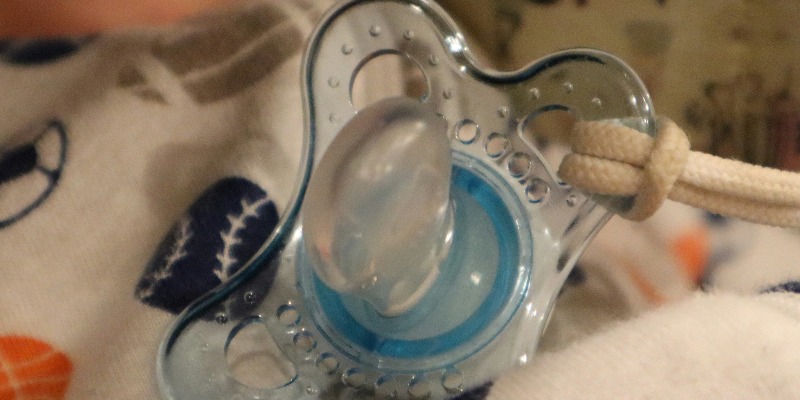
Pacifiers come in sizes like 0–3 months, 3–6 months, and 6+ months. Always check packaging for age guidelines to ensure correct nipple size and airflow design (ventilation holes are essential for safety). |
Match size with age for comfort and safety. Oversized pacifiers may cause gagging; undersized ones can affect suction and comfort. |
| 4. Shape & Shield Design |
Orthodontic, cherry, and bulb-shaped pacifiers each feel different. Shields should have ventilation holes and be one-piece (no detachable parts) to prevent choking. |
Use one-piece pacifiers for newborns. Try different shapes to find your baby’s preference. |
| 5. Material & Cleaning Tips |
Always sterilize before first use. Boil or steam for babies under 6 months. Replace pacifiers every 4–6 weeks or at the first sign of wear. Avoid sweeteners or honey on nipples. |
Babies under 6 months need sterilized pacifiers daily. Older infants: wash with warm, soapy water. |
| 6. Pacifier Safety Features |
Look for BPA-free, one-piece design, and ventilation holes. Avoid cords, clips with strings, or modifications. |
Ideal for all infants, especially during sleep. |
Best Pacifiers by Age Group
| Age Group |
Top-Rated Pacifiers |
Key Features |
| 0–3 Months (Newborns) |
Soft silicone, hospital-approved, easy to sterilize. |
|
| 3–6 Months |
Orthodontic design supports oral development; BPA-free. |
|
| 6+ Months |
Lightweight, glow-in-the-dark handle reduces jaw pressure. |
When to Introduce a Pacifier and When to Cut Back
Here’s what evidence and expert guidance tell us about the timing of introducing a pacifier.
Right Time to Give a Child a Pacifier
If you are breastfeeding, you should wait until breastfeeding is firmly established. This is often after 3-4 weeks.
If you are bottle-feeding or have special circumstances like a preterm baby, travel, or even some medical needs, then you might introduce sooner, under pediatric advice.
Many experts suggest that pacifier use is most beneficial during the first 6 months for SIDS prevention, pain relief, and soothing.
Weaning Or Cutting Back:
Risks of using a pacifier begin to outweigh the benefits as the baby gets older. Like after ~12 months. This is when ear-infection risk increases and dental issues loom.
Many dentists and pediatricians recommend actively phasing out pacifier use before age 2.
This is ideally between the second half of the first year and 24 months.
Sing a pacifier beyond 3-4 years has a much higher risk for dental/mouth alignment issues.
Practical Tips for Introducing a Pacifier
Here’s what you can actually do (not just read about):
- Offer the pacifier after a feeding or when the baby seems settled, and not instead of feeding. Ensure hunger is satisfied first.
- Choose a safe pacifier. It should be one-piece, the proper size, and have no strings or cords. Always replace when worn.
- Don’t dip the pacifier in sweeteners with sugar or honey. This increases the risk of cavities and infections.
- You should keep one in your diaper bag, car, and always have a spare in hand. But don’t rely on it for every fuss. You should teach other soothing methods too, like rocking, white noise, and a change of scenery.
- If the baby resists the pacifier, never try to force it. Not all babies like them.
- As you approach the age of ~6-12 months, you should start planning to take away the pacifier. You can keep daytime pacifier use minimum. You can use it mainly for naps or bedtime if needed.
- When you are ready to wean, you should reduce availability gradually. Then move to only certain times, like bedtime. You should offer alternatives like soft toys and cuddling, and praise them for being a “big kid.”
- Talk with your paediatrician or dentist if you notice ear infections, dental misalignment, or speech delays. Some new research links heavy pacifier use with language development issues.
Why Does a Pacifier Decision Matter
As a new parent or working-parent couple juggling schedules, sleep deprivation, feeding questions and everything else, a pacifier is not just a baby tool decision. It is part of how you shape your baby’s earliest comfort habits. Their sleep routines and even their safety.
The phrase “introducing a pacifier” might sound simple, but the real effect is layered with feeding, soothing, sleep, development, and habit formation.
Making an informed choice means you are less likely to feel guilt or second-guess later. Saying “yes” to a pacifier because you need a break or “no” because you worry about dental issues are both valid. They just come with known trade-offs.
Final Takeaway for the Best Pacifier
When you introduce a pacifier to your baby, it is not an all-good or all-bad decision. It is about what fits your baby. What goes well with your feeding style, your comfort level, and your goals? If you choose to use to give your child a pacifier or not, both options are okay.
Your journey as new parents does not and cannot be perfect. It just has to be thoughtful and aligned with your baby’s needs and yours.
Baby
Why Your Baby Won’t Stop Crying and What Each Cry Really Means
February 21, 2026

Pregnancy
How to Sleep Comfortably During Pregnancy When Nothing Seems to Work
February 14, 2026

Kids
Best Online Coding Classes for Kids: Fun, Interactive, and Beginner-Friendly
October 11, 2025

Baby
Useful Baby Care Tips Every First-Time Parent Should Know
September 28, 2025