How to Know If Your Child’s Autism Evaluation Is Done Right
Kids|March 20, 2026How Co-Parenting Can Work Better After Separation
Family lifes|March 19, 2026Best Sound Machine For Baby: 5 White Noise Machines That Improve Sleep
Baby|March 12, 2026Soft Structured Vs. Wrap Vs. Hip Seat: Which Baby Carrier Fits You
Baby|March 10, 2026How Predictable Routines Reduce Family Stress (and What Actually Works)
Family lifes|October 16, 2025The Importance of Physical Activity For Kids
Kids|October 11, 2025How to Foster Social Skills in Kids
Many children struggle when it comes to making friends. In public situations, some kids become fidgety, avoid eye contact, or don’t know how to join a conversation. Others may want to connect but feel unsure about what to say or how to act.
Social skills do not develop at the same pace for every child. While some children naturally enjoy group interactions, others need time, guidance, and repeated practice. This difference is normal—and it does not mean something is “wrong.”
With the right support, daily guidance, and age-appropriate activities, parents can help children feel more comfortable interacting with others and forming meaningful connections.
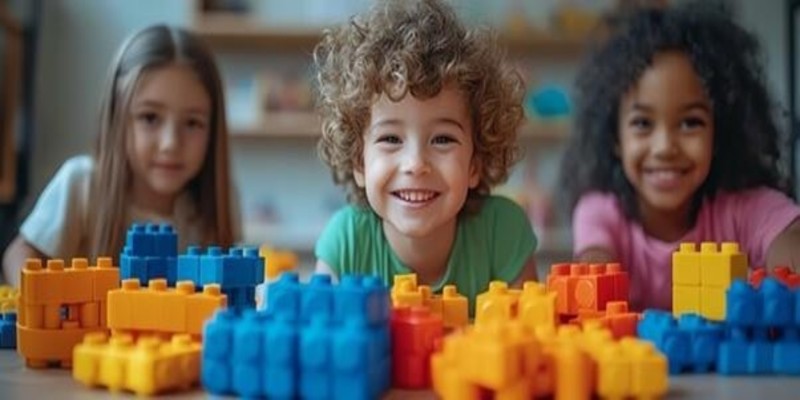
Why Social Skills Matter for Kids (Beyond “Making Friends”)
Social skills are not just about being outgoing. They help children function confidently in everyday life.
Strong social skills help children:
-
Build and maintain friendships
-
Express thoughts, needs, and emotions clearly
-
Handle conflict without emotional outbursts
-
Work cooperatively in school and group settings
-
Develop self-confidence and emotional awareness
Children who feel socially capable are often more willing to try new experiences, speak up for themselves, and manage challenges independently.
How Social Skills Develop (And Why It’s Not Linear)
Many parents expect social skills to improve steadily with age, but development is often uneven.
A child may:
-
Be talkative at home but quiet in public
-
Play well with adults but struggle with peers
-
Show confidence one week and withdraw the next
This is normal. Social development depends on temperament, environment, emotional maturity, and experience. Skills improve through practice, not pressure.
Signs Your Child May Need Extra Support
It’s helpful to know when to gently intervene rather than “wait it out.”
Your child may benefit from extra guidance if they:
-
Avoid peer interaction consistently
-
Become anxious or overwhelmed in group settings
-
Struggle to take turns or share
-
Have frequent conflicts with other children
-
Express loneliness, but don’t know how to connect
These signs do not mean a child lacks social ability—only that they need more structured practice.
Social Development Activities for Children
Social skills in kids don’t just develop through talking—they need action! When you let your child practice communication, teamwork, and empathy through activities, you help them develop better.
Role Playing Games
Children enjoy pretending, and this method helps them understand social interactions. Through role-playing, children learn to speak and interact properly in various social situations.
- Show your child how to handle situations by acting out scenes about making new
- friends and sharing toys. You can alternate playing different parts or bring other children into the game
- It gives children social exposure in addition to practical communication training.
Compliment Exchange
Giving children compliments in exchange serves as an effective method to develop their social competencies. Through compliments, children build self-confidence, and they develop skills to acknowledge other people.
- Lead your child to offer one complimentary statement daily. Children should express
- their compliments using statements such as "I like your drawing talent" or "The puzzle assistance was helpful."
- The simple act of praising people produces good social interactions while it strengthens their self-confidence and helps them learn interpersonal skills.
Playdates and Group Activities
Playdates teach children essential skills regarding sharing,d group cooperation, and learning to switch between activities. Interactions between children help them achieve better social abilities.
- You should schedule a play meeting between your child and their friend, who is also
- their classmate. Allow your child to choose an activity among activities, such as playing games, making crafts, or creating joint structures.
- Playdates serve as an optimal environment where children naturally learn to solve problems and communicate without facing much pressure.
Best Ways to Improve Kids' Communication Skills
The main emphasis goes beyond teaching what to speak because children require training in understanding others, along with developing their communication effectiveness. Here’s how you can help:
Model Good Communication
The process of learning continuously from parents exists because children learn their communication habits directly from their parents. Demonstrate effective conversation skills to your child by implementing appropriate practices of your own.
What to do: Take turns speaking and listening. Respectful communication involves keeping your eyes focused on other people and asking relevant questions about their statements while demonstrating active interest.
The effectiveness comes from children learning through observation. Friendly communication behavior provides your child with practical knowledge to handle purposeful dialogue.
Encourage Active Listening
Children must develop the same level of listening skills as their spoken ability to communicate effectively. An active listener focuses on attentiveness, along with asking questions and demonstrating empathy during conversational moments.
What to do: Encourage your child to listen carefully when others speak. Make them rephrase the content of the conversation or describe what stood out to them in the discussion.
Active listening allows children to develop empathy skills by instilling the idea that paying attention equals the importance of voice.
Use Simple and Clear Language
Children often become confused when they receive excessive information at once. Simple verbalization helps students understand information better, which improves their communication skills.
What to do: When giving instructions, break them down into simple steps. The instruction “Please pick up your toys, then carry them to your room for proper storage” provides a more effective approach than “Clean up the living room,m followed by moving your toys into your room and organizing everything correctly.”
The method succeeds because basic communication helps children comprehend directives while cutting down misunderstandings.
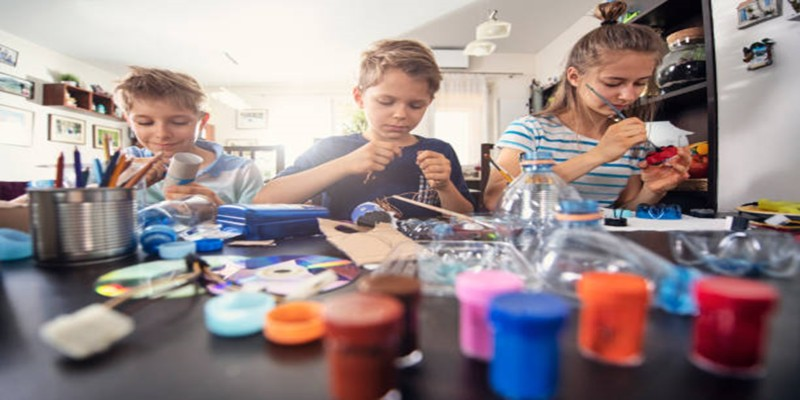
Helping Kids Make Friends: A Simple Guide
The effort of developing friendships tends to be challenging, specifically for withholding and uncertain children. Some support will help your child learn to build relationships. Here’s how:
Teach Confidence and Self-Worth (Without Forcing “Bravery”)
Confidence in children doesn’t mean being loud, outgoing, or socially dominant.
It simply means believing, “I’m allowed to try.”
Many children hesitate socially because they fear:
Saying the wrong thing
Being ignored
Being rejected
Instead of telling your child to “be confident,” focus on helping them feel safe trying.
What actually helps:
Praise effort, not outcomes
“I’m proud of you for saying hi,” not “You should’ve made a friend.”
Normalize nervousness
“It’s okay to feel nervous. Most kids do.”
Emphasize patience
Friendships usually form over time, not in one interaction.
When children feel valued at home, they are more willing to step into social situations with less fear.
Encourage Social Initiatives (With Clear, Gentle Boundaries)
Many children want friends but don’t know how to take the first step. They need simple, repeatable actions, not vague encouragement.
Practice easy conversation starters:
“Can I play with you?”
“What are you playing?”
“Do you want to play together?”
Role-play these at home so the words feel familiar when the moment comes.
Teach What to Do If the Answer Is “No”
This is one of the most important—and often missing—parts of social skill-building.
Help your child understand:
A “no” is not a failure
A “no” is not personal
One interaction does not define their social ability
Give them an exit plan:
“Okay, maybe another time.”
“That’s fine.”
“I’ll go play over there.”
Knowing what to do next makes social attempts feel safer.
Help Kids Understand Healthy Social Boundaries
Being socially confident also means knowing when to pause.
Teach your child that:
Asking once or twice is okay
Repeatedly asking after a clear “no” is not
Everyone has different comfort levels
This helps children develop respect for others while protecting their own self-esteem.
Support Small Wins (They Matter More Than You Think)
Friendship-building isn’t all-or-nothing.
Celebrate moments like:
Starting a conversation
Joining a game briefly
Staying calm after being ignored
These small steps are how real confidence grows.
Your Role as a Parent
Instead of asking:
“Did you make a friend today?”
Try:
“Who did you talk to?”
“What was the easiest part of today?”
“What felt a little tricky?”
These questions encourage reflection without pressure.
Encouraging Social Growth in Kids
Your child can build essential social abilities in kids through sustained practice with proper activities together with guidance, which will boost their friendship-making abilities, self- confidence, and emotional competence.
Your continuous small-step assistance will lead to numerous child victories, which you should celebrate.
Through patience and repeated practice, your child will develop professional abilities to handle social activities.

Pregnancy
How to Sleep Comfortably During Pregnancy When Nothing Seems to Work
February 14, 2026

Kids
How Sleep Affects Child Growth and Immunity: A Parent’s Guide
February 7, 2026

Baby
How To Choose A Convertible Car Seat That Fits In Small Vehicles
January 1, 2026

Baby
Comparing the Top 5 Organic Baby Formulas for Sensitive Stomachs
January 1, 2026