How Co-Parenting Can Work Better After Separation
Family lifes|March 19, 2026Best Sound Machine For Baby: 5 White Noise Machines That Improve Sleep
Baby|March 12, 20266 Simple Ways to Boost Your Child's Attention Span
Kids|January 15, 20267 Best Mattress for Kids Who Toss, Sweat, and Grow Fast
Kids|January 10, 2026Why Your Child's "Sorry" Might Not Be Real: Helping Kids Feel Empathy
Family lifes|December 27, 2025A Parent’s Guide to the Best Phone Plan for Kids
Kids|October 7, 2025Top 10 Educational Toys for Kids: Learning Through Play
A favorite childhood toy can do more than entertain-it can teach. The right toys help kids build problem-solving abilities and critical thinking skills through play. We’ll explore top-rated educational games and learning toys that make skill-building fun and engaging.
How to Pick an Educational Toy Your Child Will Actually Enjoy
1. Think About Their Age
For toddlers around 2 to 4, the world is all about exploring with their senses. Toys that light up, make sounds, or can be stacked are great, they’re learning without even realizing it.
By the time kids are 5 to 7, they’re ready for a bit more challenge. They enjoy building things, solving simple puzzles, and experimenting with beginner coding kits. It’s the age where figuring something out feels exciting, not frustrating.
Once they’re 8 or older, they can handle more complicated stuff. Robotics kits, advanced STEM sets, and strategy games are perfect for stretching their thinking. You just want to avoid toys that are too simple or too hard, either one will get ignored.
2. Match Their Personality
Every kid has a play style:
Quiet or focused kids often love puzzles, building sets, or hands-on experiments. They like figuring things out at their own pace.
Social, outgoing kids thrive on interactive games or cooperative activities; they enjoy toys that let them play with friends or family.
Kids who love to tinker will light up over circuit kits or engineering sets. Let them explore safely while taking things apart and putting them back together.
Creative kids might gravitate toward art supplies, storytelling toys, or drawing kits. Anything that encourages imagination is a win.
When a toy fits how your child naturally likes to play, learning feels effortless.
3. Play Together or Let Them Go Solo
Some toys are meant to be explored alone, others shine when you join in. Science kits, beginner coding sets, and complex construction toys are more fun if you walk them through the steps. Even simple board games or cooperative builds can turn into bonding time.
Think about how much time you realistically have each day or week. Picking a toy that works with your schedule can make playtime both fun and stress-free.
At the end of the day, the best educational toy is one your child actually wants to play with, and that sneaks a little learning in along the way.

4. Screen or No Screen
Screen-free toys: Encourage quiet focus, hands-on practice, and longer attention spans. Examples include building blocks, puzzles, and art sets.
Mixed toys: Combine physical pieces with tablets or apps for interactive lessons, such as coding kits with companion apps.
Fully electronic: Like programmable robots or interactive learning tablets, are highly engaging but require limits on screen time.
A good approach is to balance hands-on and digital play. Even for screen-based toys, look for those that allow problem solving, creativity, or building skills rather than passive viewing.
5. Budget Considerations
Toys can get pricey, so it helps to have a rough idea of your budget.
Small toys around $10 to $30 are perfect for testing the waters. Things like shape sorters, simple puzzles, or stacking blocks are fun for kids and easy on the wallet if the interest fades.
Mid-range toys, $30 to $70, usually have more pieces or extra challenges. Bigger building sets or beginner coding kits fit here and can keep kids busy longer.
Advanced STEM kits start around $70 and up. Robotics, multi-day projects, and more complex builds can really grow with your child and hold their attention for hours.
A simple trick is to think about how long your child will actually play with it. If it’s something they’ll keep coming back to, spending a bit more is worth it. If it’s probably a short-term interest, stick to something smaller.
Best Educational Toys for Toddlers (Ages 2-4)
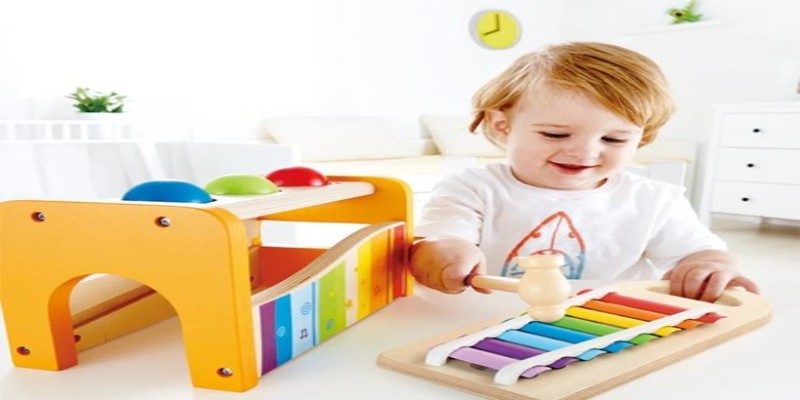
This wooden toy blends pounding fun with early musical play. Toddlers hit the balls and watch them roll over the built-in xylophone, creating sounds, or slide out the xylophone to play separately.
It helps develop hand-eye coordination, fine motor skills, and basic cause-and-effect understanding. Kids often stay engaged for 20-30 minutes experimenting with rhythms.
The sturdy wood construction makes it durable for solo play or casual family time. It can be a bit noisy in small spaces, so supervision is recommended when using the hammer.
Price: $36-$40, sometimes lower online.
Part of Fisher-Price’s Think & Learn line, this bright caterpillar introduces sequencing and basic logic. Toddlers connect the segments to build a path, then press a button to watch it move along the route.
It encourages cause-and-effect learning, early planning skills, and problem-solving. Kids enjoy rearranging segments, adding obstacles, or creating mini races. Older siblings often join in, making it a fun group activity.
Segments may loosen with heavy play, and it works best on hard surfaces. This screen-free toy keeps children physically and mentally engaged.
Price: $30-$35, with expansion packs sold separately.

Best Educational Toys for Ages 5-7 (Updated 2026)
These colorful magnetic tiles let kids snap shapes together to build towers, tunnels, forts, vehicles, or anything they imagine. The open-ended play strengthens spatial reasoning, engineering thinking, and early STEM problem-solving skills.
Playing often becomes a shared activity. Children spend long stretches constructing, then knocking down creations to start again. With siblings or friends, they collaborate on bigger builds, learning patience and planning.
Tiles are magnetic with metal inside, so supervision is recommended. Cracks can expose magnets, and play works best on soft surfaces with occasional checks.
Price: ~$99.99 for the classic set, with smaller combos or travel tins available.
Why it stands out: Excellent for teamwork, creative design, and long-term engagement.
This classic wooden board encourages early word building without screens. The set includes sturdy wooden letters and colorful boards where children place letters to complete spelling challenges.
It’s tactile and calm, ideal for independent learners just starting to recognize letters and words. Kids enjoy returning to the same board repeatedly, gaining satisfaction from “getting it right.” It also works well as a quiet activity for car rides or bedtime.
For children with some reading experience, it may feel simple, but that simplicity reinforces confidence and fine motor skills before moving to more advanced literacy games.
Price: $21-$31, depending on seller.
The Osmo Genius Starter Kit blends physical play with interactive screen time, turning a tablet into an educational playground. It includes games for math, spelling, problem solving, tangrams, and drawing that respond to physical pieces placed in front of the device.
Kids often return to Osmo daily, mixing puzzle pieces with on-screen challenges. Many families like that it feels more like game time than formal learning, which keeps attention high.
Some note the base kit can feel light without add-ons, and cardboard tiles should be handled gently. Parts of the app may suggest additional games, which can prompt requests for more content.
Price: ~$49.99, with promotions or bundle packs varying.
Best Educational Toys for Ages 8 and Up (Updated 2026)
This advanced robotics kit lets kids create programmable robots using motors, sensors, and the LEGO coding app. It combines creative building with real coding challenges, ideal for children who want to solve real-world problems with their designs.
In daily use, kids dive in enthusiastically, constructing robots and using the Scratch-based drag-and-drop interface to make them move and react. Many enjoy pairing building with coding challenges or setting up missions, like navigating mazes or completing timed tasks.
Be aware that the SPIKE portfolio is retiring later in 2026 as new curriculum-aligned kits arrive, so this may be one of the last chances to own this exact set. Availability on third-party sellers can be limited, with listings going out of stock quickly.
Price: ~$429.95 from the official LEGO Education online store.
Snap Circuits Jr. introduces children to electronics by snapping components onto a board to build circuits that light up, make sounds, and power simple projects. Pieces click together without tools, making it fun and accessible for beginners.
Kids follow the manual to build projects like sirens, lamps, or sound-activated switches, then experiment to see how circuits change. This hands-on approach sparks curiosity about how electricity works.
Children often return to the kit multiple times, starting independently and later involving parents or siblings for more complex projects. Many families report hours of collaborative play, exploring and expanding circuits together.
Price: ~$20-$40, depending on seller and set.
This award-winning game combines marble run play with spatial reasoning and planning skills. Players build a 3D maze using challenge cards of increasing difficulty, then watch a marble race through it.
Gravity Maze works well for quiet, independent play. Kids often tackle several challenges in a row, starting with simpler puzzles for early success and moving to more complex configurations.
Some note that pieces are small, so losing a marble or tile can interrupt play, and instructions may take a moment to understand. Once familiar with the mechanics, children return repeatedly to solve puzzles and improve their critical thinking.
Price: ~$18-$52, depending on condition and seller.
This hands-on kit lets kids assemble their own computer and use the Kano coding environment to learn programming concepts like games, apps, and storytelling. The tools are beginner-friendly but engaging enough for curious kids over time.
Children enjoy building the hardware, snapping together boards, keyboard, and case, then diving into creative coding projects on screen. Families often create themed challenges, extending the kit beyond a single build. For tech-enthusiastic kids, Kano supports longer-term learning and experimentation.
Some parents note that the physical assembly reinforces tech concepts, though beginners may need guidance at first.
Price: ~$200-$300, depending on kit and retailer.
Perfect for young artists, this light-up tracing pad helps children practice drawing by illuminating the page so they can trace and build fine motor confidence. While primarily an art tool rather than strict STEM toy, it offers focused, calm creative play, great for afternoon quiet time or artistic exploration sessions.
Kids often use it as part of drawing routines: tracing favorite characters, sketching original ideas and progressing into freehand work once they’ve gained confidence. A light surface makes it easier to see details and helps maintain focus. Some kids may move on to other art tools once they master the basics; but as an introductory tool, it’s excellent for boosting drawing confidence and precision.
Price: ~US$30-$35.
Why it stands out: Encourages creativity and fine motor development in a screen-free format.
Things Parents Often Overlook
- Don’t buy something too hard right away
If a toy is above your child’s level, they may give up or lose interest quickly. Start simple and work your way up so play stays fun and confidence grows.
- STEM label doesn’t mean it’s the best fit
Just because a toy says STEM doesn’t mean your child will automatically enjoy it. Look at what your child likes and pick toys that match their interests. A coding kit is no good if they would rather build towers or draw.
- Small pieces need a place to live
Toys with lots of tiny parts are great for creativity, but they need storage. If pieces get lost, playtime becomes frustrating. Use bins or boxes and teach your child to put pieces away. This keeps toys safe and teaches responsibility.
- Manage electronics and screen time
Electronic toys are fun but can be distracting. Set limits so your child can enjoy interactive learning without too much screen time. Mixing in some screen-free options keeps play balanced.
- Interest beats features every time
A toy can have every feature, but if it doesn’t match what your child enjoys, it will sit unused. Watch what your child naturally likes to do and choose toys that spark curiosity.
Keeping these points in mind helps make toy choices smarter. It is not about getting the newest or most complex set, but finding something your child will enjoy, explore, and grow with. Picking toys that match age, personality, and interest makes play both fun and meaningful.
How These Toys Help Your Child Grow
Educational toys do more than just keep kids busy. They help kids practice problem solving, think critically, and get creative while having fun.
There are lots of options out there today, from STEM kits to hands-on toys for toddlers. You can pick the ones that fit your child’s age, interests, and personality.
Building with Magna-Tiles, trying coding with a Kano kit, or solving puzzles with Gravity Maze all turn learning into a game your child will enjoy. Looking at different toys and thinking about what works best for your child makes playtime both fun and meaningful.